Naming ceremony and baby invitation videos
Namkaran, naamkaran, barasala, cradle ceremony or godh bharai — the invitation that announces a name for the first time.
16 designs · free preview before you pay
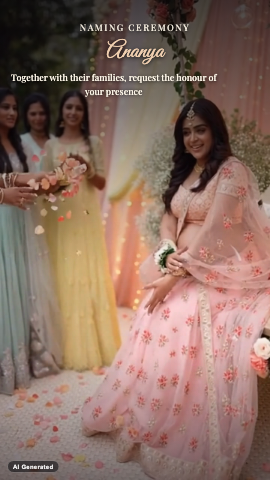
Godh Bharai Film
40s · 2 languages

Days To Go · Lullaby
26s · 2 languages
Dilbar Little One
50s · 2 languages
Ghoomar Lullaby
45s · 2 languages
Godh Bharai Katha
60s · 2 languages
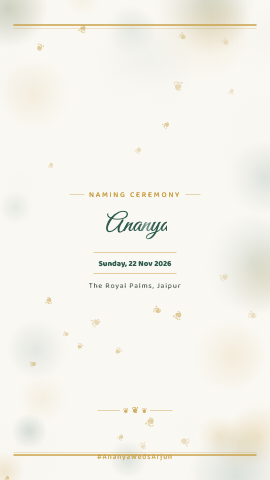
Linen Little One
50s · 2 languages
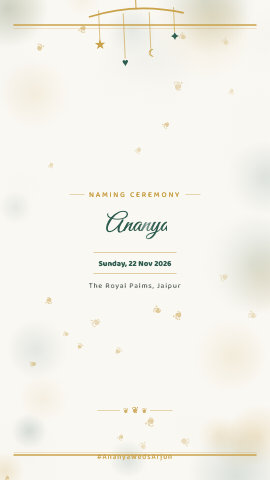
Meadow Lullaby
45s · 2 languages
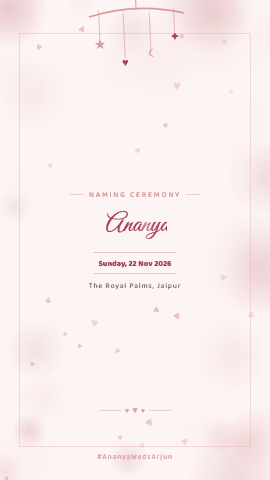
Mohabbat Lullaby
45s · 2 languages
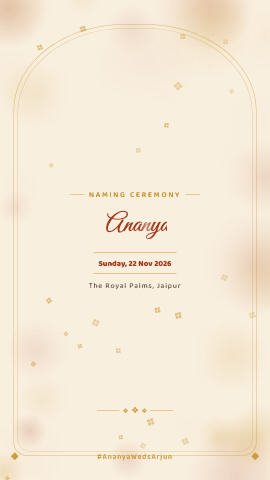
Padharo Little One
50s · 2 languages
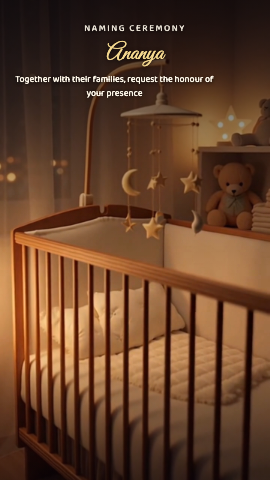
Pehla Kadam
36s · 2 languages
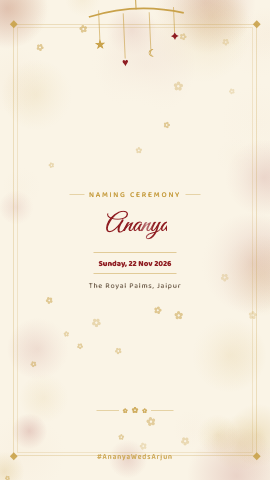
Rasm Lullaby
45s · 2 languages
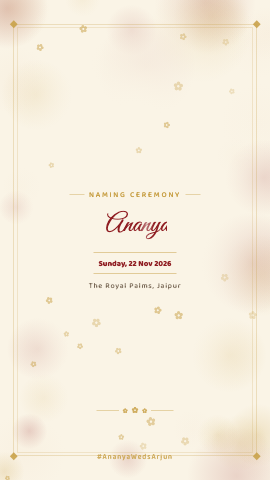
Utsav Little One
50s · 2 languages
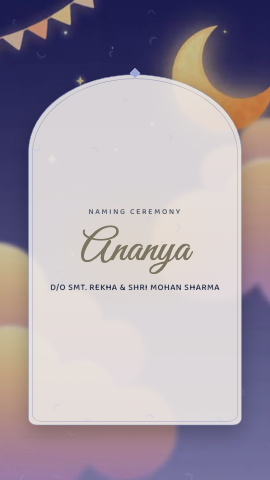
Lori Moon
48s · 2 languages
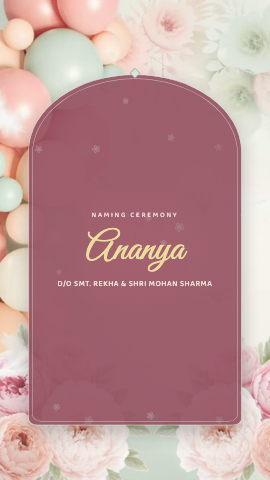
Pastel Meadow
48s · 2 languages
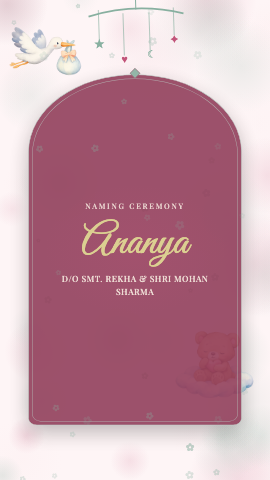
Little Lotus
48s · 2 languages
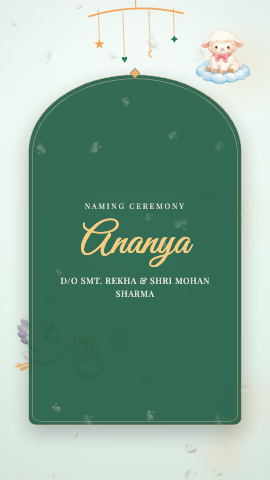
Stork Story
48s · 2 languages
About naming ceremony invitations
The naming ceremony goes by many names across India — namkaran in the north, barasala or naamkarana in the south, a cradle ceremony in many families — and is typically held between the eleventh and the twenty-first day after the birth, though families frequently hold it later to let relatives travel. The invitation carries something no other card does: it is where most of the guest list learns the baby’s name.
Related functions use the same designs. The godh bharai or valaikappu is the baby shower held before the birth; the annaprashan or choroonu marks the first solid food at around six months. Each has its own ritual and its own timing, and each is named on the card as the family names it.
Where the ceremony includes a puja before the lunch, put both on the invitation with their own times — relatives will come for the puja, friends often for the meal.
What to put on the invitation
- The baby’s name
- The reason the invitation exists. Give it the largest type on the card.
- Parents’ and grandparents’ names
- Grandparents are conventionally named on naming-ceremony invitations.
- Puja and meal times
- Separate times if the ritual and the lunch are separate.
- A photograph
- Optional, and many families prefer to keep the face off a forwarded card.
In your language
The headings are set in the language, not transliterated — so the film reads as a card rather than as an English layout with translated text dropped in.
Naming Ceremony invitation questions
- When is the namkaran ceremony held?
- Traditionally on the eleventh or twelfth day after birth, and in many families on the twenty-first. The date is often set by the family priest against the birth star, and plenty of families hold it later so that relatives can travel.
- What is the difference between namkaran and annaprashan?
- Namkaran is the naming ceremony in the first weeks after birth. Annaprashan — choroonu in Kerala, mukhe bhaat in Bengal — is the first feeding of solid food at around six months. They are separate ceremonies with separate invitations.
- Should the baby’s photograph be on the invitation?
- It is entirely optional. Many families deliberately leave it off a card that will be forwarded widely and share photographs privately instead. The designs work either way.
Free watermarked preview with your own names first.