Upanayanam and thread ceremony invitation videos
Upanayanam, janeu, munja, brahmopadesham — the sacred thread ceremony, invited with the programme intact.
5 designs · free preview before you pay
Brahmopadesham
48s · 2 languages
Janeu Sanskar
48s · 2 languages
Munja Sohla
48s · 2 languages
Vidya Arambh
48s · 2 languages
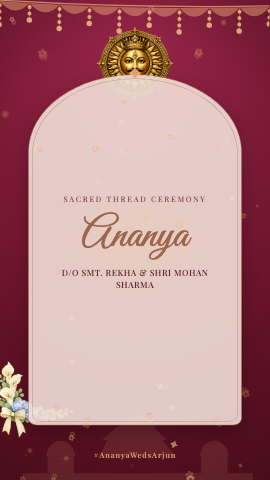
Yagnopavita
48s · 2 languages
About upanayanam invitations
The upanayanam is among the most programme-heavy functions a family hosts. It frequently begins before dawn, runs through several distinct rituals across a morning, and is followed by a lunch — and guests genuinely need the schedule, because arriving at the wrong hour means missing the part they came for.
Regional names differ: upanayanam in the south, janeu or yagnopavit in the north, munja in Maharashtra, brahmopadesham in Kerala and parts of Karnataka. The invitation should use the family’s own word, and the designs leave that wording to you.
Where the ceremony spans two days — a nandi or a puja the previous evening, the upanayanam itself the following morning — each gets its own card with its own time.
What to put on the invitation
- The boy’s name
- With the parents’ and often grandparents’ names in the host line.
- The muhurat
- Upanayanam muhurats are frequently before sunrise — print the time exactly.
- The full programme
- Nandi, the ceremony, bhiksha, lunch — with times.
- Venue
- A hall or temple, with the address written out.
Upanayanam invitation questions
- What is the upanayanam ceremony?
- The investiture of the sacred thread, marking the start of a boy’s formal education in the Vedic tradition. It is one of the sixteen samskaras and is typically performed between the ages of seven and sixteen, with the age varying by community.
- What are the other names for it?
- Janeu and yagnopavit in the north, munja in Maharashtra, brahmopadesham in Kerala and parts of Karnataka, and poonal in Tamil-speaking families. The invitation uses whatever your family calls it.
- Should the invitation list the whole programme?
- Yes. Upanayanam functions run from before dawn through lunch across several distinct rituals, and guests who only have a date will arrive at the wrong time. A card per ritual with its own timing solves it.
Free watermarked preview with your own names first.